
Layers of Application Modernization for Enterprises
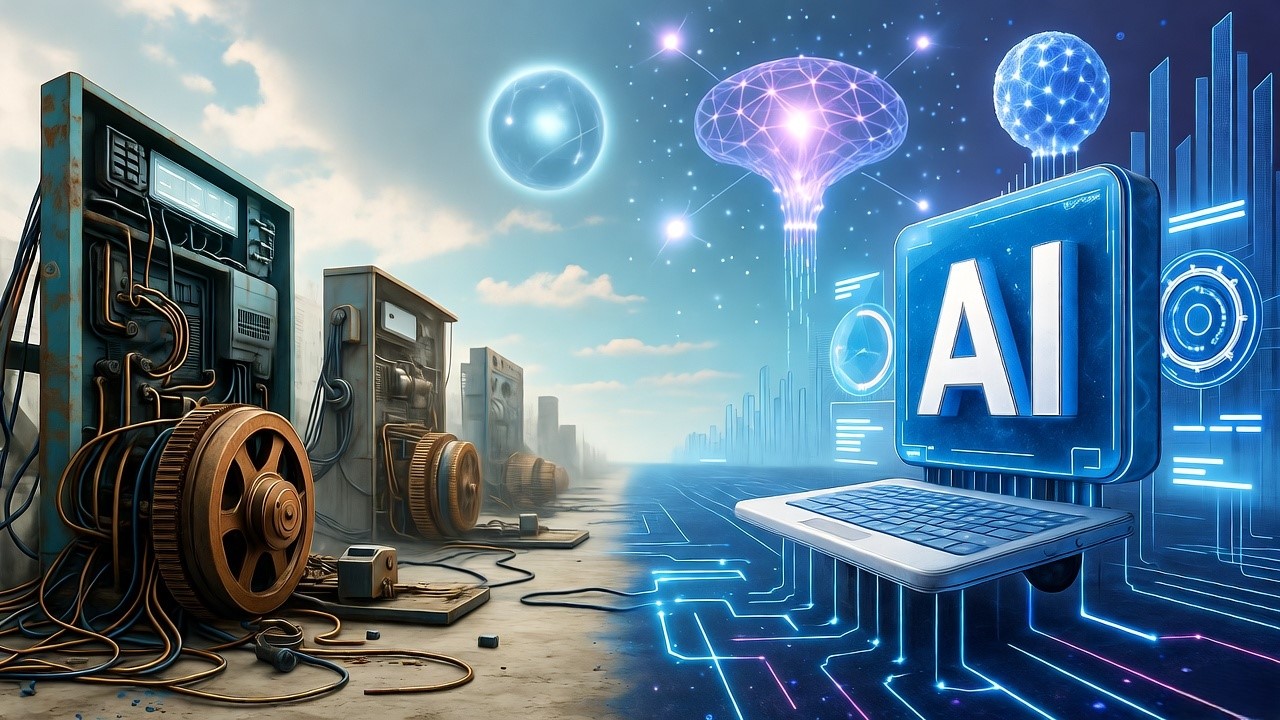
Layers of Application Modernization: A Roadmap for the Modern Enterprise
Application modernization services involve updating or transforming legacy software systems to align with current business needs and modern technology standards, such as cloud computing and AI.
These services help organizations improve performance, enhance security, and reduce the high maintenance costs associated with outdated technology.
Modernization Approaches (The 7R's)
- Rehost (Lift & Shift): Move to the cloud without code changes (e.g., VMs).
- Replatform (Lift & Reshape): Move and make minor optimizations (e.g., to managed databases).
- Refactor: Optimize code for cloud, potentially adopting microservices without major re-architecture.
- Rearchitect: Redesign for cloud-native features like microservices and containers.
- Rebuild: Recreate the application from scratch using modern principles.
- Replace: Switch to a new off-the-shelf solution.
- Retain/Retire: Keep it or decommission it if no longer needed.
Key Service Components for Application Modernization
Professional modernization services typically include:
- Portfolio Assessment: Auditing the entire digital estate to prioritize which apps to modernize based on business value and technical complexity.
- Cloud Enablement: Migrating workloads to major platforms like AWS, Microsoft Azure, or Google Cloud.
- Data Modernization: Upgrading legacy databases and storage systems to cloud-native data warehouses or lakes.
- UI/UX Redesign: Updating outdated user interfaces to improve accessibility and user engagement.
- API & Integration: Building secure, well-documented APIs to allow legacy systems to communicate with modern internal and external services.
- Security & Compliance: Embedding DevSecOps and Zero Trust architectures to ensure systems meet current regulations like GDPR or HIPAA.
Top Providers and Tools for Application Modernization
Major technology firms offer end-to-end modernization services:
- Global Consulting & Tech Firms: IBM Consulting, Kyndryl, HCLTech, DXC Technology, HakunaMatataTech and Infosys.
- Cloud Platform Tools: Tools like Azure Migrate and AWS Migration Hub automate discovery and assessment.
- Specialized Platforms: Mphasis NextSTEP™ and HPE Right Mix Advisor and ADAM DB Migration provide AI-driven insights for transformation roadmaps.
1. UI/UX Revamp: Modernizing the Frontline Experience
Modernization begins where users engage, with the interface. A dated, cluttered, or inconsistent design doesn’t just affect aesthetics; it impacts productivity, trust, and adoption.
A UI/UX revamp focuses on aligning the product experience with how users actually work today.
This includes:
- Responsive design: ensuring seamless functionality across mobile, tablet, and desktop.
- Accessibility improvements: supporting all users through clear contrast, keyboard navigation, and assistive technology.
- Simplified workflows: reducing steps in common tasks to shorten training time and minimize errors.
For executives, UI/UX modernization is often the easiest area to quantify. Better design translates to higher satisfaction scores, stronger engagement, and measurable operational efficiency.
More importantly, a modern interface becomes the foundation for other modernization layers, it allows the back end to evolve without confusing end users.
2. Codebase Restructuring and Migration: Strengthening the Core
Behind every legacy interface lies a complex, aging codebase. Over years of patches and quick fixes, the architecture often becomes rigid and interdependent. Adding new features can take months; integrating with modern APIs becomes risky.
Codebase restructuring addresses these weaknesses directly.
It typically involves:
- Refactoring code to improve readability, consistency, and modularity.
- Decoupling large monolithic systems into smaller, maintainable units.
- Migrating outdated frameworks or programming languages to modern equivalents.
This phase is critical because it determines how future-ready the application truly becomes. Without reworking the code, every other modernization effort, cloud adoption, API development, or automation, sits on unstable ground.
Executives should treat this as an investment in resilience. A cleaner, modular codebase reduces maintenance costs, supports faster development, and minimizes technical debt.
3. API Layer Modernization: Building Seamless Connectivity
In modern software ecosystems, APIs serve as the connectors that link internal systems, external tools, and partner platforms. When legacy systems use outdated or proprietary integration methods, the result is isolation, data silos, slower workflows, and missed opportunities for automation.
API modernization transforms this landscape by:
- Adopting RESTful, GraphQL, or gRPC standards for structured and predictable integrations.
- Introducing API gateways for centralized management, version control, and performance optimization.
- Implementing authentication, encryption, and rate-limiting for secure and scalable communication.
Once modernized, the API layer allows enterprises to plug into new ecosystems, SaaS services, AI models, analytics tools, and partner applications, without re-engineering the entire system.
From a business perspective, this layer enables strategic flexibility. It allows your technology stack to grow through collaboration, not replacement.
4. Cloud Adoption and Microservices Integration: Scaling with Agility
Migrating to the cloud is often viewed as the centerpiece of modernization, but it only succeeds when the earlier layers are in place. Once the application is modular and API-ready, it can safely transition from on-premise infrastructure to the cloud.
Cloud adoption introduces elasticity and cost control. Enterprises can scale resources up or down on demand, paying only for what they use. It also simplifies disaster recovery and global accessibility.
At the same time, microservices integration takes modernization to the architectural level. Instead of one large application, functionality is divided into independent services that communicate through APIs. Each service can be developed, deployed, and scaled separately.
This layer enables:
- Continuous deployment and faster release cycles.
- Fault isolation, preventing one issue from affecting the whole system.
- Experimentation and innovation, as teams can build and test new features independently.
Microservices are typically orchestrated through Kubernetes or Docker, with serverless computing extending scalability even further. For leadership teams, this step marks a visible turning point—from static legacy operations to a dynamic, cloud-driven enterprise.
5. Observability, DevOps, and Security Modernization: Sustaining Long-Term Agility
Once an application is modernized, it must remain reliable and secure as it grows. The final layer focuses on operational excellence through observability, automation, and protection.
Observability means more than monitoring uptime. It brings together logs, traces, and metrics into a unified view that reveals system health in real time. This allows teams to detect issues proactively before users are affected.
DevOps modernization integrates development and operations through automation, using continuous integration and delivery pipelines (CI/CD). This reduces manual effort, accelerates releases, and maintains consistency across environments.
Finally, security modernization ensures that the application can defend itself in a constantly changing threat landscape.
This involves:
- Zero-trust architectures that verify every access request.
- Static and dynamic application testing (SAST/DAST) to catch vulnerabilities early.
- Runtime protection to guard against active exploits in production.
Together, these capabilities create a self-sustaining system, observable, adaptive, and resilient, where modernization becomes a continuous process rather than a one-time transformation.
The Modernization Roadmap: How to Approach It
For many enterprises, the question is not whether to modernize, but where to start. Attempting to upgrade everything at once can lead to disruption and budget overruns.
A phased approach works best:
- Assess business impact. Identify which systems limit innovation or create bottlenecks.
- Start with the user layer. UI/UX updates build confidence and deliver early wins.
- Tackle core code and APIs next. These define how adaptable the system will be.
- Move to the cloud strategically. Prioritize modular services and measurable outcomes.
- Invest in observability and security early. Continuous visibility protects long-term ROI.
Each layer should reinforce the one before it, ensuring modernization unfolds in a way that balances speed, cost, and stability.
Business Outcomes: Why Modernization Matters
A well-executed modernization initiative delivers measurable business value:
- Faster innovation cycles: New features and integrations can launch in weeks, not months.
- Operational efficiency: Automation reduces manual maintenance and downtime.
- Scalability and cost optimization: Cloud-native infrastructure adapts to business growth.
- Security and compliance: Modern frameworks support regulatory and data protection standards.
- Employee and customer satisfaction: Better interfaces and performance drive engagement.
In short, modernization is both a technical and strategic advantage. It aligns technology investments with long-term business goals.
What's Next
Modernization is not a replacement, it’s an evolution. It allows enterprises to preserve the best of their existing systems while preparing for what comes next. By addressing each layer, UI/UX, codebase, APIs, cloud, and operations, organizations
create a future-ready foundation that can integrate AI, scale globally, and adapt to any technological shift.
For executives, the takeaway is clear: modernization must be intentional, layered, and continuous. Done correctly, it transforms not just your software, but your business itself, into an agile, intelligent, and enduring enterprise.
