
Enterprise-Level Software Development for Complex Business Needs
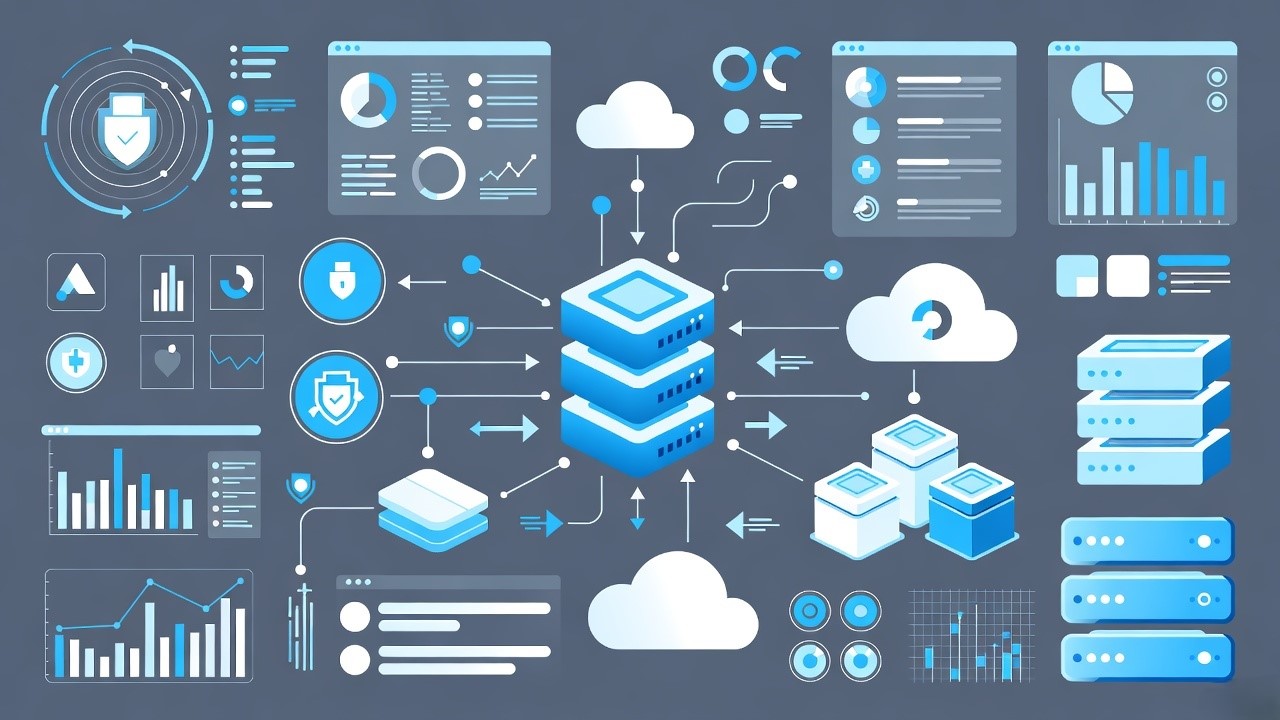
Enterprise Level Software Development with Advanced Security: A Strategic Blueprint for American Businesses
Enterprise level software development refers to the process of creating high-scale applications tailored to meet the complex requirements of large organizations.
Unlike consumer apps, enterprise software is built to be the "digital backbone" of a company, connecting multiple departments and managing vast amounts of mission-critical data.
Core Characteristics of Enterprise Level Software Development
- Scalability: Designed to support thousands of concurrent users and process high volumes of transactions across various regions without performance loss.
- Deep Integration: Must connect seamlessly with diverse legacy systems, third-party APIs, and modern cloud services to ensure data flows consistently across the organization.
- Robust Security: Includes advanced features such as role-based access control (RBAC), end-to-end encryption, and rigorous audit logs to protect sensitive corporate data.
- Regulatory Compliance: Built to adhere to strict industry standards like GDPR, HIPAA, SOC 2, or ISO 27001.
Common Types of Enterprise Software
- Enterprise Resource Planning (ERP): Unifies core business processes like finance, HR, and procurement into a single platform (e.g., Oracle Cloud ERP).
- Customer Relationship Management (CRM): Manages all customer interactions, sales leads, and support tickets (e.g., Salesforce).
- Supply Chain Management (SCM): Tracks the flow of goods and information from suppliers to the final customer.
- Business Intelligence (BI): Analyzes large datasets to provide real-time insights and data-driven decision-making tools.
The Development Process
The enterprise software development life cycle (SDLC) is typically more extensive than standard projects, often taking 6 months to 2 years.
- Discovery & Analysis: Gathering detailed requirements from diverse stakeholders to solve specific coordination problems.
- Architecture Design: Planning a modular structure, often using microservices or service-oriented architecture (SOA)—to ensure long-term maintainability.
- Development & Iteration: Writing code in small increments (Sprints) while maintaining heavy documentation for compliance and future handovers.
- Rigorous Testing: Employing automated testing pipelines, including security penetration tests and user acceptance testing (UAT).
- Deployment & Support: Implementing careful rollout strategies (like staging environments) and providing ongoing 24/7 maintenance through Service Level Agreements (SLAs).
Modern Trends for 2026
- Cloud-Native & Hybrid: Increasing use of AWS, Microsoft Azure, or hybrid setups to gain flexibility and reduce on-premises infrastructure costs.
- AI Integration: Embedding machine learning to automate predictive analytics and enhance decision-making within workflows.
- Low-Code/No-Code: Utilizing platforms like Mendix or WaveMaker to accelerate development cycles and empower "citizen developers" within the organization.
The Evolution of Enterprise Software Development
- The journey of enterprise software dev has shifted dramatically from isolated, monolithic systems to interconnected, intelligent platforms.
- Previously, software was built to automate specific departmental tasks, finance, HR, inventory.
- Security was often a perimeter defense, a firewall to be installed later.
- Today, enterprise software is the central nervous system of a business. It integrates everything from customer interactions to supply chain logistics and real-time analytics.
- This shift demands a new development philosophy. An enterprise software product development project is no longer just about features; it's about creating a secure, scalable, and adaptable digital asset.
- The complexity is immense. Modern enterprise applications are webs of first-party code, open-source libraries, third-party APIs, and cloud microservices.
- A vulnerability in any single component can compromise the entire system.
- Consequently, the development process itself has transformed. Agile and DevOps methodologies emphasize speed and continuous delivery, but this velocity cannot come at the expense of security.
- The answer is a paradigm where security is embedded, automated, and continuous, a concept known as DevSecOps.
Foundational Pillars of the Modern Enterprise Level Software Development Process
Building mission-critical software for American enterprises requires a disciplined, structured approach. Rushing to code without a solid foundation is the fastest path to cost overruns, security gaps, and product failure.
The following pillars are non-negotiable.
Strategic Planning and Detailed Requirements
- The blueprint for any successful build starts with clarity.
- A comprehensive Software Requirements Specification (SRS) document is your single source of truth.
- It must articulate both functional requirements (what the system does) and non-functional requirements (how it performs, scales, and secures data).
- For U.S. companies, this phase must explicitly address regulatory compliance (like HIPAA for healthcare or CCPA for consumer data) and industry-specific standards.
- Ambiguity here leads to misinterpretation, scope creep, and critical security controls being overlooked.
- In our projects, we treat this document as a living contract, validated iteratively with stakeholders to ensure business objectives and security mandates are perfectly aligned.
Adopting Agile and DevOps for Resilience
- The old "waterfall" model, where security testing occurred only at the end, is dangerously obsolete.
- Agile methodologies, particularly Scrum, break development into short, iterative sprints.
- This allows for continuous feedback, adaptation, and, crucially, the integration of security checks at every stage.
- When a cross-functional team (developers, security architects, QA engineers) collaborates daily, vulnerabilities are caught when they are 100 times cheaper to fix than if discovered after deployment.
- DevOps extends this by automating the pipeline from code commit to deployment, enabling both speed and consistency. The goal is to make secure deployment the only possible path to production.
Architecting for Scalability and Performance from Day One
American enterprises grow and evolve; your software must be ready. Scalability must be an architectural decision, not a future retrofit.
This means favoring:
- Microservices Architecture: Breaking down the application into small, independent services. This allows you to scale, update, and secure specific functions without impacting the entire system.
- Cloud-Native Design: Leveraging cloud platforms like AWS, Microsoft Azure, or Google Cloud for their elastic scalability, managed services, and built-in security tools. A distributed cloud strategy can also help meet data sovereignty requirements.
- Strategic Technology Selection: Choosing languages and frameworks (like Kotlin for backend microservices or React for admin dashboards, as used in a real case for a global manufacturer) that support maintainability and future growth.
Integrating Advanced Security: From Concept to Deployment
Security can no longer be a separate team's responsibility. It must be a shared culture and an integrated suite of practices throughout the enterprise software development process.
Here’s how to operationalize it.
Shifting Left: Security at the Start of the SDLC
"Shifting left" means integrating security practices early in the Software Development Lifecycle (SDLC).
This includes:
- Threat Modeling: During design, teams proactively identify potential threats, attack vectors, and security controls.
- Secure Coding Standards: Developers write code against a benchmark of approved, secure patterns, reducing common vulnerabilities like injection flaws or broken authentication from the outset.
- Developer Training: Empowering your developers with security knowledge turns them into your first line of defense.
The Essential Toolkit: SAST, SCA, DAST, and ASPM
Relying on one tool is insufficient. A layered testing strategy is key:
- Static Application Security Testing (SAST): Scans source code for vulnerabilities while it's being written.
- Software Composition Analysis (SCA): Identifies vulnerabilities in open-source components and libraries, which power over 90% of modern applications. This is critical for mitigating supply chain attacks.
- Dynamic Application Security Testing (DAST): Tests the running application from the outside, simulating how an attacker would exploit it.
The challenge for enterprises is "tool sprawl"—managing a flood of disconnected alerts from these point solutions. This is where Application Security Posture Management (ASPM) platforms become vital. An ASPM acts as a central command center, correlating findings from SAST, SCA, and DAST tools, deduplicating alerts, and providing risk-based prioritization. It tells your team not just about all the vulnerabilities, but which ones to fix first based on actual exploitability and business impact.
Proactive and Adaptive Security Measures
Beyond testing, these practices form your active defense:
- Zero-Trust Architecture: Operates on the principle "never trust, always verify." Every access request, inside or outside the network, must be authenticated, authorized, and encrypted.
- Secrets Management: Never store API keys, passwords, or certificates in source code. Use dedicated, secure vaults with automated rotation.
- Multi-Factor Authentication (MFA) & Role-Based Access Control (RBAC): MFA is a baseline requirement for all user and admin access. RBAC ensures users have only the permissions absolutely necessary for their role.
- Confidential Computing: An emerging trend highlighted by Gartner, this technology protects sensitive data while it is being processed in memory, securing it even in untrusted cloud environments.
Addressing the AI-Generated Code Challenge
The rise of AI coding assistants is a double-edged sword. While they boost productivity, they can also introduce subtle, novel vulnerabilities at scale.
Mitigating this requires new guardrails: policy controls on AI tool usage, specialized security scanners trained to identify AI-generated code patterns, and maintaining strong human review for critical code segments.
Table: Key Enterprise Application Security Tools and Their Role
Real-World Enterprise Application Development Example: A Security Centric Case Study
Consider a project for a U.S.-based Fortune 500 med-tech company. The goal was to modernize a legacy patient data management system.
The legacy system was fragile, costly to maintain, and a significant compliance risk under HIPAA.
The Security-Integrated Approach:
- Requirements & Design: The SRS explicitly mandated end-to-end data encryption, comprehensive audit trails, and strict RBAC. Threat modeling sessions identified data breach and improper access as top risks.
- Architecture: We designed a microservices architecture on Microsoft Azure, leveraging its HIPAA-compliant services. Each service handling Protected Health Information (PHI) was isolated.
- Development & Security: Developers used SAST tools in their IDEs. All open-source components were vetted through an SCA tool and logged in a Software Bill of Materials (SBOM). Azure Key Vault managed all encryption keys and secrets.
- Deployment & Beyond: The CI/CD pipeline included automated security gates. DAST scans ran on staging environments. The ASPM platform provided the CISO with a real-time dashboard of the application's security posture for audits.
The result was a scalable, modern platform that reduced operational costs, improved performance, and, most importantly, turned a compliance liability into a demonstrably secure asset, passing rigorous internal and external audits.
Security as Your Competitive Advantage
For American enterprises, robust enterprise software product development is the engine of innovation and efficiency. However, without advanced, integrated security, that engine is built on a fragile foundation. The modern approach is clear: security must be proactive, not reactive; integrated, not bolted-on; and continuous, not periodic.
The journey involves adopting Agile and DevOps cultures, leveraging a strategic mix of tools from SAST to ASPM, and fostering a company-wide ethos where security is everyone's responsibility. From the initial planning of your enterprise software dev project to the ongoing maintenance of the live application, security must be the consistent thread.
As you plan your next digital initiative, view security not as a cost center but as a core business function that protects your revenue, your reputation, and your trust with customers. The right development partner doesn't just write code, they engineer resilience.
