
RPA in Supply Chain Is Quietly Replacing Your Ops Tea

What is RPA in Supply Chain?
Robotic Process Automation (RPA) in supply chain is the use of software robots, or “bots,” to automate repetitive, rule-based digital tasks. These tasks are typically done by humans and involve structured data, such as entering information, processing invoices, or tracking shipments. By automating these processes, RPA helps companies increase efficiency, reduce errors, and free up employees to focus on more complex, value-added work.
This technology acts as a bridge between various systems, allowing for seamless data transfer and workflow automation without the need for complex system integrations.
Key components of RPA in Supply Chain include:
- Software Bots: These are the core of an RPA system. They are programmed to mimic human actions by interacting with applications and systems, such as enterprise resource planning (ERP) software, warehouse management systems (WMS), and customer relationship management (CRM) platforms. They can perform actions like clicking buttons, copying and pasting data, and filling out forms.
- Process Automation: RPA automates routine tasks that follow a clear set of rules. For example, a bot can automatically generate shipping labels, update inventory records, or send out delivery notifications. This eliminates the need for manual data entry and reduces the risk of human error.
- Centralized Control and Analytics: RPA platforms typically include a central control panel where managers can schedule, monitor, and manage the bots. This dashboard provides real-time insights into the automated processes, showing performance metrics like task completion rates and time saved, which helps in optimizing workflows.
- Integration with Existing Systems: A significant benefit of RPA is its ability to integrate with existing IT infrastructure without requiring major changes to the underlying systems. The bots can work across multiple applications and databases, pulling data from one system and entering it into another, which streamlines complex, multi-step processes.
Benefits of RPA in Supply Chain
The key benefits of implementing RPA in logistics include faster order processing, fewer human errors, real-time shipment visibility, and substantial cost savings.
Faster Order Processing
- Automated Data Entry: RPA bots can automatically extract and input data from various sources, such as emails and order forms, into a central management system. This eliminates the need for manual data entry, which is often slow and prone to errors.
- Quick Order Validation: The bots can quickly validate customer information and order details against existing records. This ensures all necessary information is correct and complete before the order moves to the next stage, preventing delays early in the process.
- Automated Communication: RPA can automate sending order confirmations, tracking details, and delivery notifications to customers. This keeps customers informed in real-time without requiring human intervention for each communication.
Reduced Human Errors
- Increased Accuracy: Since RPA bots follow pre-programmed rules precisely, they perform tasks with a high degree of accuracy. This significantly reduces the likelihood of human errors that can occur during manual data entry, such as typos in addresses or incorrect product codes.
- Consistent Task Execution: The bots ensure that every task is executed in the same way, every time. This consistency is crucial for maintaining data integrity across the entire supply chain, from the warehouse to the final delivery.
- Less Rework: With fewer errors in the initial stages, companies spend less time and resources on correcting mistakes. This leads to a smoother workflow and reduces the operational costs associated with handling incorrect orders or returns.
Real-time Shipment Visibility
- Automated Tracking Updates: RPA bots can pull tracking data from carrier websites and automatically update the internal system. This provides a single, centralized view of all shipments, giving logistics managers a clear overview of the supply chain.
- Proactive Issue Detection: The bots can be programmed to monitor for potential delays or issues. For example, if a shipment is held up at a customs checkpoint, the RPA bot can flag it instantly and notify the appropriate personnel to take action.
- Enhanced Reporting: RPA simplifies the generation of real-time reports and dashboards. This allows for quick analysis of delivery performance and route efficiency, helping businesses to make data-driven decisions to optimize their logistics network.
Cost Savings
- Lower Operational Costs: Automating tasks with RPA reduces the need for extensive manual labor, leading to significant savings on wages and overhead. This allows companies to reallocate their workforce to higher-value activities.
- Improved Efficiency: By speeding up processes and reducing errors, RPA boosts overall operational efficiency. This leads to faster turnaround times, lower fuel consumption through optimized routes, and a more effective use of resources.
- Scalability: RPA is highly scalable, allowing businesses to handle increased order volumes without a proportional increase in costs. During peak seasons, bots can be easily deployed to manage the extra workload, ensuring operations run smoothly without the need to hire temporary staff.
Key Use Cases of RPA in Supply Chain
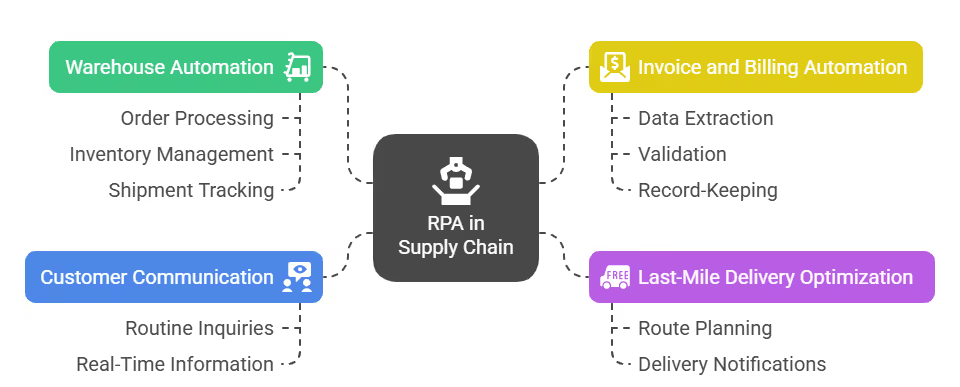
Warehouse Automation
- RPA can significantly enhance warehouse operations by automating processes like order processing, inventory management, and shipment tracking. For instance, bots can automatically update inventory records when new stock arrives, generate picking lists, and trigger alerts for low stock levels.
- By integrating with warehouse management systems (WMS), RPA can automate the creation of shipping labels and invoices, ensuring that the right products are picked and packed for each order. This reduces the risk of human error and accelerates the entire fulfillment cycle.
Last-Mile Delivery Optimization
- Optimizing the last leg of delivery is crucial for customer satisfaction and cost savings. RPA bots can automate the process of planning delivery routes by analyzing real-time data on traffic, weather, and delivery addresses. This ensures the most efficient path is chosen.
- Furthermore, bots can automatically send delivery notifications and tracking updates to customers. This keeps customers informed about the status of their order and reduces the number of calls to customer service.
Invoice and Billing Automation
- Handling invoices and billing can be a time-consuming and error-prone process. RPA automates the extraction of data from incoming invoices, validates it against purchase orders and receipts, and then enters the information into accounting systems.
- This not only speeds up the payment process but also minimizes discrepancies and ensures accurate record-keeping. The automated process also provides a clear audit trail, simplifying financial management and compliance.
Customer Communication
- RPA enhances customer communication by automating responses to routine inquiries, such as questions about order status or delivery times. Bots can instantly access data from various systems to provide accurate, real-time information to customers via email, chat, or SMS.
- Automated communication ensures a quick and consistent experience for customers, freeing up customer service representatives to handle more complex issues. The technology helps maintain high levels of customer satisfaction and loyalty.
RPA vs. Traditional Automation in Supply Chain
Robotic Process Automation (RPA) and traditional automation both streamline logistics, but they do so in fundamentally different ways. The key distinction lies in their approach: RPA automates rule-based, repetitive tasks by mimicking human actions at the user interface level, whereas traditional automation often involves complex, low-level integration with systems and databases through custom code or APIs.
This difference in approach gives each method unique advantages and disadvantages.
Differences & Advantages
- Speed and Flexibility: RPA tools are designed to be a "quick win" for automating specific tasks. Since they operate at the user interface layer, they don't require deep system changes, making them faster to deploy and more flexible to adapt to new processes. Traditional automation, however, requires significant development time and resources, making it less agile.
- Cost and Accessibility: RPA implementation is often more affordable and accessible to non-technical users, as many platforms feature low-code/no-code interfaces. This allows business teams to automate their own processes. In contrast, traditional automation projects typically demand specialized developers and extensive IT resources, leading to higher costs.
- Application Scope: Traditional automation is well-suited for large-scale, enterprise-wide processes that require deep system integration and high-volume data processing. For instance, an automated warehouse management system is a form of traditional automation. RPA is more effective for smaller, highly repetitive tasks like data entry, order tracking, or generating reports.
Challenges and Risks of RPA Implementation
- Integration with Legacy Systems: While RPA can interact with legacy systems without extensive coding, it's not without challenges. A risk exists that the RPA bot might break if the user interface of the legacy system changes, even slightly. This requires constant monitoring and maintenance, which can become an ongoing burden.
- Change Management: Introducing RPA can be a significant cultural shift. Employees might fear job displacement, leading to resistance. Effective change management is crucial to ensure a smooth transition. This involves clear communication, employee training, and redeploying staff to higher-value tasks, transforming them from doing repetitive work to managing and monitoring the automated processes.
- Scalability and Complexity: Scaling RPA across an entire organization can be difficult. As the number of bots and processes grows, managing, monitoring, and maintaining them becomes increasingly complex. This can lead to a "bot sprawl" where different departments create their own isolated automations, making governance and security a major concern.
Future Trends of RPA in Supply Chain
The future of Robotic Process Automation (RPA) in the supply chain is moving towards more sophisticated, intelligent automation. This evolution is driven by the integration of emerging technologies like Artificial Intelligence (AI) and machine learning.
This combination, often called intelligent automation, enables RPA to handle more complex and non-repetitive tasks, going beyond simple, rules-based processes.
AI + RPA (Intelligent Automation)
- The convergence of AI and RPA is creating intelligent automation solutions that can learn and adapt. Instead of simply following a pre-defined script, these systems can analyze unstructured data, make decisions, and even improve their performance over time. This is crucial for handling complex supply chain tasks such as managing vendor communications, processing invoices with varying formats, and automating order fulfillment that requires real-time adjustments.
- Intelligent automation allows for the creation of advanced Generative AI Chatbots. These chatbots can be deployed to manage customer inquiries about order status, track shipments, and even assist with returns. By integrating with backend systems, they provide instant, accurate information, significantly improving customer satisfaction and freeing up human staff to focus on more strategic activities.
Predictive Analytics in Logistics
- Predictive analytics is becoming a cornerstone of future logistics management. By using machine learning models to analyze historical data, companies can forecast demand, optimize inventory levels, and predict potential disruptions in the supply chain before they occur. This proactive approach helps businesses avoid costly stockouts and overstocking.
- The integration of predictive analytics with RPA automates the response to these forecasts. For example, if a model predicts a surge in demand for a specific product, RPA bots can automatically initiate new purchase orders, adjust stock levels in the warehouse management system, and update shipping schedules. This creates a highly responsive and efficient supply chain.
- Another key application is predicting equipment maintenance needs. Predictive analytics can analyze data from sensors on vehicles and machinery to forecast when maintenance will be required, and RPA can then automatically schedule service appointments, ensuring minimal downtime and operational efficiency.
RPA in Supply Chains : Avoiding RPA Pitfalls
We had seen RPA projects crash hard. One client lost $50K trying to automate the wrong stuff.
Here’s how to get it right:
Why Hakuna Matata Is Your RPA Superhero for Supply Chain
At Hakuna Matata, we don’t just build bots, we save your sanity. We’ve got a 90% client retention rate and saved U.S. 3PLs over $1 million by killing inefficiencies. Whether you’re a small 3PL in Texas or a global carrier in California, our RPA solutions fit your world, integrating with SAP, Oracle, and Manhattan Associates. We get the U.S. market, driver shortages, e-commerce craziness, compliance nightmares, and we’ve got your back. Our clients, from Miami to Seattle, trust us to turn chaos into profit.
Ready to join us?
Grab Your Free RPA Guide & KT Session Now
Don’t let another missed delivery or billing error tank your business. Fill out the form below to get a free RPA guide packed with a step-by-step roadmap to automate your logistics. Plus, score a 1:1 KT session with Hakuna Matata’s experts to map out your 2025 win. In the $2 trillion U.S. logistics game.
RPA is your edge, act now to stay ahead.
