
How Enterprise Logistics Teams Evaluate Load Planning Technology: A Buyer's Framework
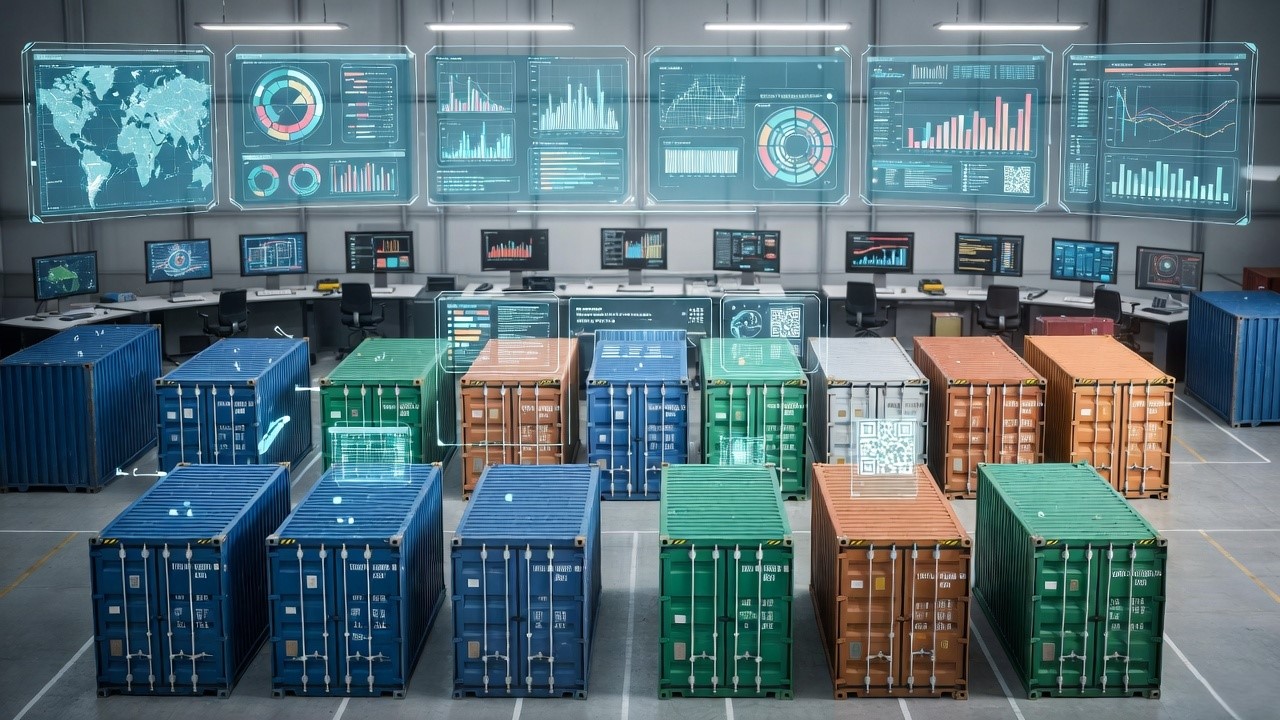
A survey of 158,000 trucks in Georgia found more than nine out of ten running below capacity. That's not a driver problem or a customer-demand problem. It's a planning failure, and at enterprise volume it's an expensive one — industry data puts average loaded-truck capacity utilisation at just 57%, with 16.7% of all miles run empty.
Most load planning coverage skips straight to a vendor comparison chart. That's the wrong starting point for an enterprise evaluation. Before you compare platforms, you need to understand what poor load planning actually costs at your volume, which technical criteria separate a genuine optimisation engine from a glorified 3D visualiser, and when the answer is custom engineering instead of a subscription.
This is that evaluation — deliberately without naming or ranking specific vendors, since the criteria matter more than any single platform's marketing.
What Poor Load Planning Actually Costs at Enterprise Scale
Underutilised trailers are the largest and least visible cost. Even a 5–10% improvement in payload utilisation eliminates millions of miles annually for a large shipper, and the inverse is just as real: a fleet running at 57% average utilisation is paying full transportation cost to move roughly half the freight it could be carrying per trip. Fuel compounds this directly — optimised loading through better weight distribution and reduced dead weight typically improves fuel efficiency by 8–15%, money left on the table every time a trailer leaves the dock underfilled.
Compliance penalties are the cost most planning teams underweight until they get hit with one. A load can satisfy total weight limits and still be illegal on axle distribution — California's axle placement rule, which requires the rear-most trailer axle sit no more than 40 feet from the kingpin, is a common trap for loads optimised on weight alone. A plan that looks correct on paper and fails at the weigh station isn't a minor inconvenience; it's a detained shipment, a missed delivery window, and a fine, stacked on top of the fuel and capacity waste already baked into the load.
Driver overtime and dispatcher time are the third cost, and they're where manual planning fails most visibly at volume. A human planner working from spreadsheets and experience can't test the arrangement possibilities an optimisation engine tests in seconds, which means manual planning either takes hours per load or settles for a workable-but-suboptimal arrangement to hit a dispatch deadline.
Five Enterprise Evaluation Criteria for Load Planning Technology
ERP and TMS integration depth. A load planning tool that requires manual data re-entry from your TMS or ERP is adding a step, not removing one. The system should pull shipment, customer, and equipment data directly from systems of record and push completed plans back without a human bridging the gap — genuine API-driven integration, not a CSV export workflow branded as one.
Constraint handling sophistication. The difference between a basic tool and an enterprise-grade one is whether it can balance weight limits, axle distribution, stacking rules, delivery sequencing, temperature zones, and product incompatibility simultaneously, not as separate manual checks. Most planning systems don't account for axle weight distribution or dock sequencing at all, which is exactly how a plan that's optimal on paper turns into an OTIF failure or a weigh-station detention on the road.
Multi-modal support. If your freight moves across FTL, LTL, and intermodal, your planning system needs to handle all three without becoming three separate tools your team maintains independently. This matters more as volume grows — a platform that only handles full-truckload optimisation forces a second system for LTL consolidation, which reintroduces exactly the fragmented, manual handoffs the software was meant to eliminate.
API availability for real-time data. Static load plans built once and executed blind miss the traffic delay, the late-arriving inbound shipment, and the driver who calls in sick. A platform with genuine API access can recalculate against live conditions, which depends entirely on whether real-time logistics data that feeds load planning systems is actually reaching the planning engine, not sitting in a separate telematics dashboard nobody's connected.
Optimisation algorithm transparency. A "black box" recommendation that a planner can't interrogate is a liability the moment it produces a plan that's infeasible on the dock. Enterprise buyers should require visibility into why the system chose a given arrangement — which constraints it weighted, and what trade-offs it made — since a dispatcher who can't explain a plan can't defend it when it's challenged.
Build vs Buy at Very High Volume
Off-the-shelf load planning software is the right default for most enterprise shippers. Implementation is measured in weeks, not months, and the constraint sets — weight, axle, stacking, delivery windows — are largely standard across industries, which means a mature commercial platform has already solved problems a custom build would spend months rediscovering.
Custom optimisation earns its place at a narrower, higher-volume tier: national carriers and large 3PLs running thousands of loads a day, where a marginal improvement in utilisation compounds into a substantial annual number, and where the constraint set is genuinely non-standard — proprietary customer commitments, unusual equipment mixes, or an integration requirement no commercial platform's connector library covers. At that volume, the cost of a custom optimisation engine is justified by the scale of the inefficiency it corrects, not by a preference for building over buying.
A National Carrier's Load Planning Overhaul, Worked Through
A national road freight carrier handling roughly 2,000 loads a day was running load planning manually across regional dispatch teams, with no shared optimisation engine and no consistent constraint logic between regions. The direct cost showed up in two places: driver overtime from planners working loads by hand under dispatch deadline pressure, and partially filled trailers that regional teams accepted as the price of hitting departure windows on time.
The constraint set for the carrier's optimisation engine had to handle weight and axle distribution across a mixed fleet of dry vans and reefers, multi-stop delivery sequencing across regional lanes, and product incompatibility rules for a customer base that included both food and industrial freight moving through shared terminals. Building that constraint logic correctly, rather than approximating it with generic weight-only optimisation, was the difference between a plan that looked good in the system and one that actually cleared the dock.
Once live, the carrier's fuel cost per load dropped meaningfully, consistent with the 8–15% fuel efficiency range that better weight distribution and reduced dead weight typically produce, and trailer utilisation improved enough to reduce the total truck count needed for the same freight volume. Driver overtime tied to manual planning dropped in parallel, since dispatchers were no longer hand-building loads against a deadline. The carrier's experience matches the broader pattern in transforming logistics operations end to end — this will link directly to /logistics-software once that page is live: the return came from correcting a planning gap that had existed for years, not from a single new feature.
What Data Quality Load Planning AI Actually Requires
An optimisation engine is only as good as the shipment and equipment data feeding it. Dimensional and weight data for every SKU needs to be accurate at the item level, not estimated at the pallet level — a system optimising against approximate weights will produce plans that look correct and fail at the axle scale. Equipment specifications — trailer dimensions, weight limits, axle configurations — need to be current in the system, not assumed from a general equipment class that doesn't reflect your actual fleet mix.
Real-time visibility into inbound shipments and equipment availability is the harder requirement, and the one most implementations underestimate. A load plan built against a static snapshot of what's expected to arrive is already stale by the time it's dispatched if inbound timing shifts, which is why the connection between live logistics data and the planning engine matters as much as the optimisation algorithm itself. Get the data foundation wrong, and even the most sophisticated constraint-handling engine produces plans that look optimal and don't survive contact with the dock.
If you're evaluating load planning technology at enterprise volume and want the integration and constraint-handling requirements scoped before you commit to a platform, enterprise AI software engineering is where we'd start — this will link directly to /logistics-software once that page is live.
