
Top Connected Car Technologies Driving the Future of Auto Industry
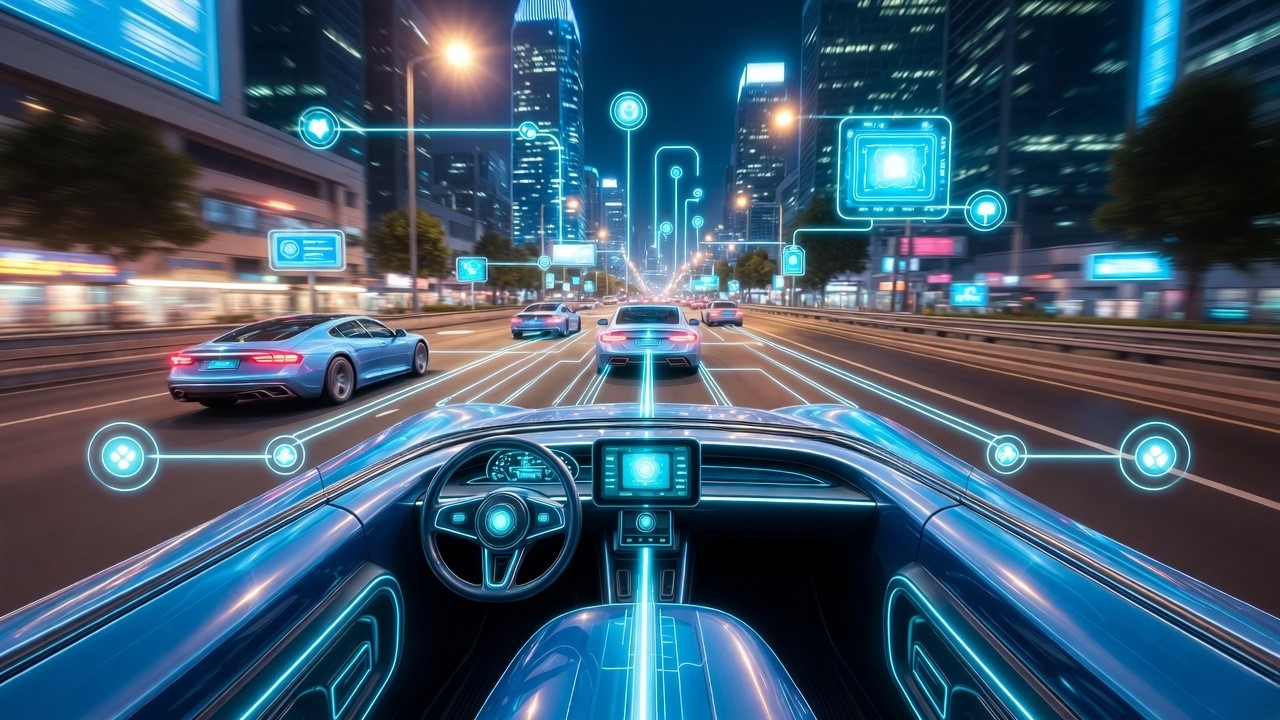
Best Connected Tech Innovation in Auto Industry in 2026 | TL; DR
The best connected tech innovations in the auto industry center on enhancing safety, improving efficiency, and enabling advanced features like autonomous driving through robust communication networks.
Vehicle-to-Everything (V2X) Communication
V2X is a foundational innovation enabling vehicles to exchange real-time data with their surroundings, including other cars, infrastructure, and pedestrians.
- Vehicle-to-Vehicle (V2V): Cars share speed, location, and direction data to warn each other of sudden braking or hazards ahead, helping prevent chain-reaction accidents and improve traffic flow.
- Vehicle-to-Infrastructure (V2I): Vehicles communicate with smart city elements like traffic lights and road signs. This allows for optimized signal timing, traffic congestion management, and alerts about road conditions or construction.
- Vehicle-to-Pedestrian (V2P): The system uses sensors to detect vulnerable road users and alert nearby drivers (and potentially the pedestrians themselves via smartphones), significantly boosting safety in urban areas.
Software-Defined Vehicles (SDVs) and Over-the-Air (OTA) Updates
The shift toward SDVs means vehicle functions, from performance to infotainment and ADAS, are primarily controlled by software rather than just hardware.
- Continuous Improvement: Manufacturers like Tesla and General Motors use OTA updates to deploy new features, performance boosts, and critical security patches remotely, eliminating the need for physical service center visits.
- New Revenue Models: This architecture allows automakers to offer features, such as advanced navigation or enhanced driver assistance, as subscription services, creating ongoing revenue streams.
AI and Advanced Driver-Assistance Systems (ADAS)
Artificial intelligence and machine learning analyze the massive amount of data collected by vehicle sensors to enhance safety and personalize the driving experience.
- Predictive Maintenance: AI models analyze sensor data (e.g., brake wear, battery health) to predict potential component failures before they occur, reducing downtime and repair costs.
- Enhanced Safety: AI is central to advanced safety features like automatic emergency braking (AEB), lane-keeping assist, and driver monitoring systems that detect drowsiness or distraction.
- Hyper-Personalization: In-car AI learns driver habits and preferences, automatically adjusting climate control, seat position, and entertainment settings for a seamless, customized experience.
5G Connectivity and Edge Computing
The integration of 5G networks and edge computing provides the high-speed, low-latency communication necessary for advanced connected features.
- Real-Time Responses: 5G enables near-instantaneous data exchange (latency below 1 millisecond) critical for time-sensitive ADAS and V2X functions, reducing accident risks.
- Faster Processing: Edge computing processes data closer to the source (in the vehicle or nearby infrastructure), improving reliability and response times for safety-critical functions without relying solely on distant cloud servers.
How Modern Connected Cars Actually Communicate and Compute?
At its core, a connected car is a vehicle that uses internet access to exchange data with external devices, networks, and infrastructure. For U.S. developers, understanding the layered architecture of this connectivity is crucial for building robust applications.
The Critical Layers of Connected Car Architecture
A connected car operates on a well-defined communication stack. Each layer has a distinct role, and development often focuses on integrating solutions at a specific level.
The Five Types of Automotive Communication (V2X)
Connectivity is multifaceted. The term V2X, or "Vehicle-to-Everything," encompasses all the following communication types, each solving a unique problem:
- Vehicle-to-Vehicle (V2V): Cars share data like speed and location to warn each other about hazards, smoothing traffic flow and preventing chain-reaction accidents.
- Vehicle-to-Infrastructure (V2I): Vehicles communicate with traffic lights, road signs, and toll systems. This can help manage traffic congestion in American urban centers and enable smarter highway systems.
- Vehicle-to-Pedestrian (V2P): Sensors detect vulnerable road users and share their location with nearby vehicles, a critical safety feature for city driving.
- Vehicle-to-Cloud (V2C): This is the backbone for most consumer-facing services. It enables real-time navigation, remote diagnostics, and the over-the-air software updates that are essential for SDVs.
- Vehicle-to-Network (V2N): Connects the vehicle to broader cellular networks for general data services and entertainment.
The shift to 5G connectivity is supercharging these capabilities, particularly for V2V and V2I, by offering the ultra-low latency and high reliability required for safety-critical applications.
The Engine of Intelligence: AI and the Software-Defined Vehicle
Connectivity provides the pipeline, but artificial intelligence is the brain that makes sense of the data.
The modern vehicle is becoming a centralized, high-performance computing platform.
From Static Machines to Dynamic Platforms
A software-defined vehicle (SDV) uses software to control not just infotainment, but core functions like braking, steering, and energy management. This software can be updated regularly to enhance performance, add features, and fix issues long after the car leaves the factory. American companies like Tesla pioneered this approach, but traditional OEMs are now racing to adopt it.
AI applications are vast, but several key areas are delivering immediate return on investment (ROI) for U.S. manufacturers and developers:
- Predictive Maintenance & Diagnostics: AI models analyze sensor data to predict component failures (e.g., battery cell degradation, brake wear) before they happen, reducing downtime for fleets and personal vehicles.
- Advanced Driver-Assistance Systems (ADAS): AI-powered computer vision is the core of features like automatic emergency braking and lane-keeping assist. These systems are foundational to the journey toward autonomous driving.
- Hyper-Personalization: In-car AI learns driver habits—from preferred cabin temperature to daily routes—and automatically adjusts settings. Systems like Mercedes-Benz's MBUX use natural language processing for conversational control.
- Optimized Electric Vehicle Performance: AI is critical for EV competitiveness. For example, ZF's TempAI solution uses machine learning to manage electric motor temperatures with over 15% greater accuracy, unlocking approximately 6% more peak power and extending range.
The Tangible Business Benefits
For American businesses, investing in AI-driven connectivity is a strategic imperative. A McKinsey Global AI Survey found that 25% of firms adopting AI report significant improvements in operational performance.
In the automotive context, this translates to:
- Smarter, Faster Manufacturing: AI-driven robotics and computer vision quality control reduce defects and production costs.
- Sharper Supply Chain Decisions: AI forecasting helps optimize inventory and mitigate disruptions, a lesson learned from recent global challenges.
- New Revenue Models: Enabled by SDV architecture, features like advanced driver assists or performance boosts can be offered via subscription services, creating ongoing revenue streams.
What American Consumers Want: Insights from the Market?
Building successful technology requires understanding the end-user. Recent data reveals a nuanced picture of American consumer adoption.
Willingness to Pay and Satisfaction Gaps
While connectivity offers immense value, converting that value into paid subscriptions is an industry challenge. According to S&P Global Mobility's 2025 Connected Car Study, 68% of global respondents are willing to pay for connected services, a notable decrease from 86% in 2024.
The study reveals a clear hierarchy in what consumers value most:
- Safety & Security Services: Features like automatic crash notification and stolen vehicle tracking command the highest willingness to pay. Consumers understand their direct value.
- EV-Specific Services: Range optimization and smart charging analytics are highly valued by electric vehicle owners.
- Convenience Services: Navigation and infotainment personalization often have a lower perceived monetary value, as many consumers use smartphone-based alternatives like Apple CarPlay or Android Auto.
Overcoming Adoption Barriers
For developers and OEMs, addressing key consumer concerns is essential for wider adoption:
- Data Privacy & Security: Americans are increasingly wary of how their driving data is collected and used. Transparency and robust cybersecurity are non-negotiable for building trust.
- Cost & Perceived Value: Consumers resist paying recurring fees for features they deem basic or rarely use. They also reject "feature fragmentation," where hardware is present but software is locked behind a paywall.
- Awareness and Complexity: Many car owners are simply unaware of the connected features available to them. Others find managing multiple subscriptions and in-car interfaces cumbersome.
The successful strategy, as we've implemented with clients, involves bundling high-value safety features, offering flexible subscription terms, and ensuring seamless activation and user onboarding.
